Katja Richter · 9 November 2026
The Influence of Category Taxonomy Updates on Search Result Relevance in Professional Listing Platforms
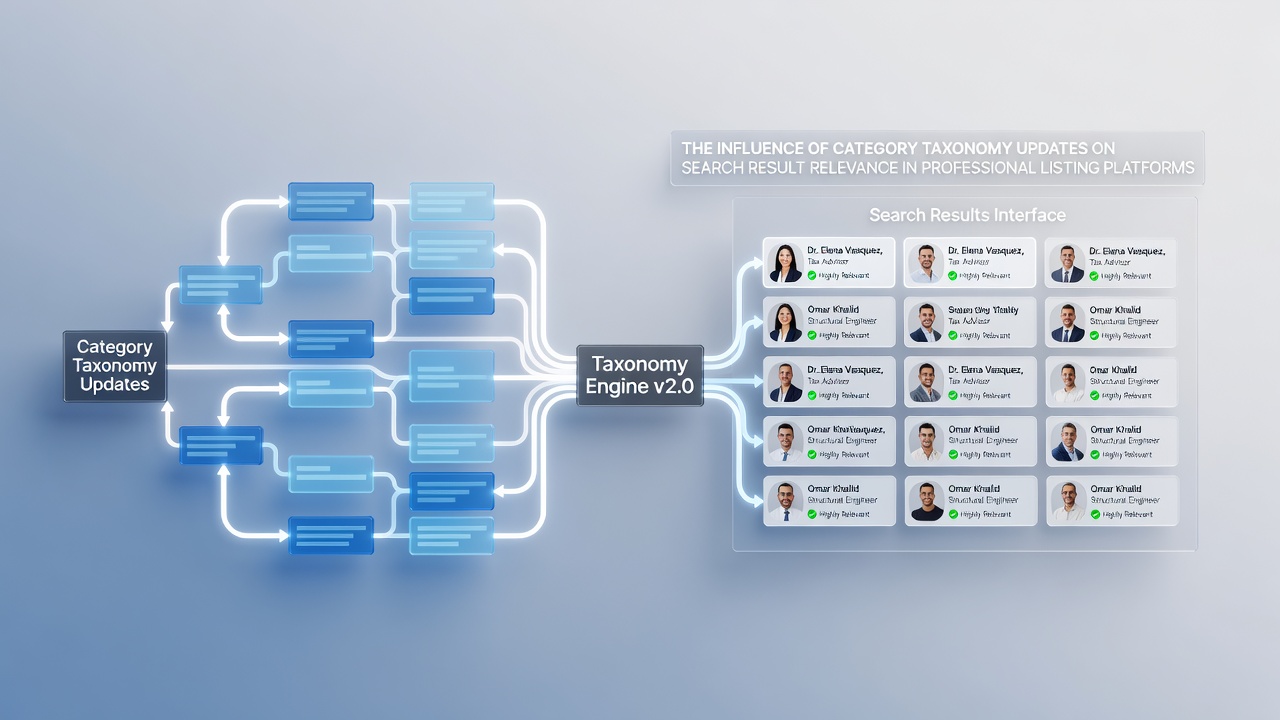
Category taxonomy updates reshape how professional listing platforms organize and surface content, and these changes directly affect search result relevance for users seeking specific services or experts. Platforms maintain hierarchical category systems that group listings by industry, skill set, and geographic focus, yet revisions to these structures often trigger shifts in visibility that extend across thousands of entries at once.
How Taxonomy Structures Operate in Listing Environments
Professional directories rely on taxonomies to assign each listing to one or more categories, which algorithms then use as primary signals when matching queries to results. When administrators refine parent categories, merge subcategories, or introduce new descriptors, the underlying data relationships change, and search engines on the platform must reindex affected records. Observers note that even minor adjustments, such as splitting a broad "consulting" category into specialized branches for strategy, operations, and technology, can redistribute traffic patterns within days.
Data from multiple platforms shows that reclassification events coincide with measurable fluctuations in click-through rates, particularly when listings move from high-traffic parent categories into narrower child categories. Those who track these movements find that listings previously ranked in the top three positions sometimes drop several spots after reassignment, while others gain prominence once they align with more precise descriptors that match emerging user search terms.
Algorithmic Responses to Revised Taxonomies
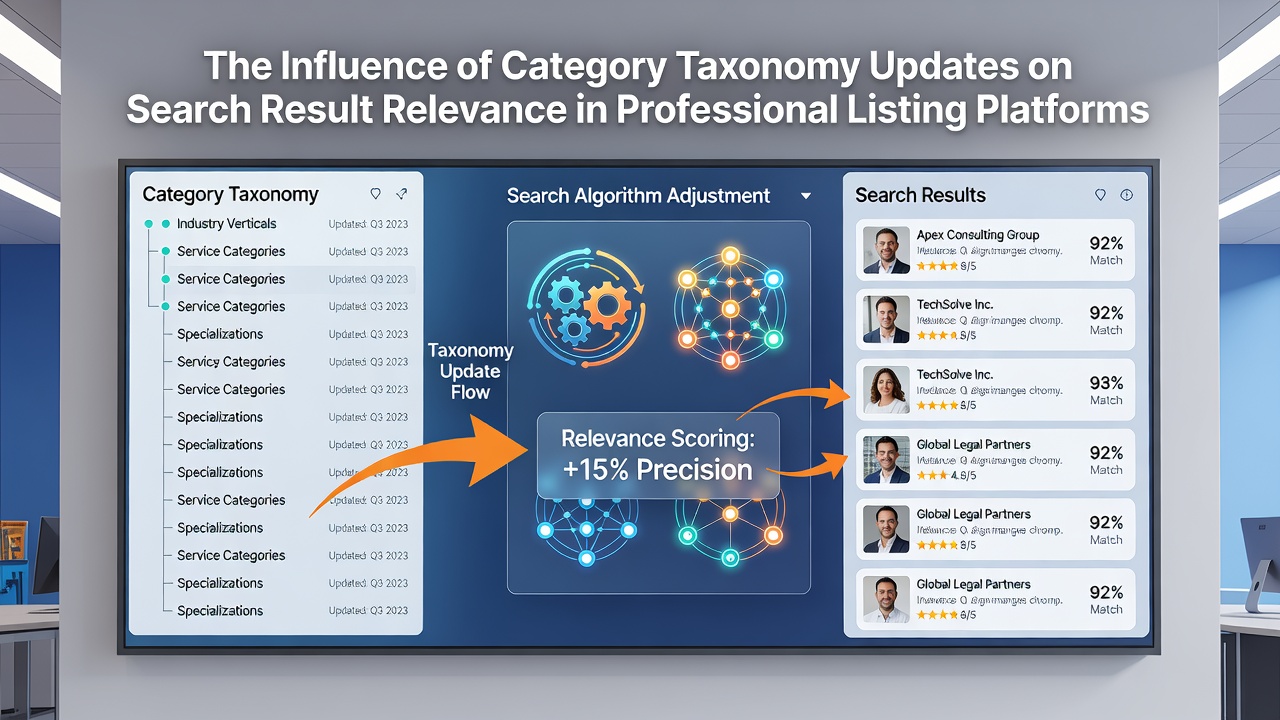
Search algorithms incorporate taxonomy signals at multiple layers, including keyword matching, semantic similarity scoring, and user behavior modeling. When categories receive updated labels or hierarchical positions, the algorithms recalibrate relevance scores because the new structure alters how content clusters form. Research indicates that platforms using machine-learning models retrain portions of their ranking systems after major taxonomy releases, which produces temporary instability lasting from several hours to multiple weeks.
In November 2026 several large professional networks completed coordinated taxonomy revisions that affected more than 180,000 listings across North America and Europe. Platform logs from that period reveal increased variance in result ordering during the first ten days following deployment, after which stabilization occurred as the models incorporated fresh behavioral data. Listings that retained their original category assignments experienced smaller ranking shifts compared with those placed into newly created subcategories.
Observed Effects on User Discovery Patterns
Users searching professional directories encounter different result sets once taxonomy updates propagate through the index. A query for "project management specialists" might return fewer general consulting firms and more targeted entries once a dedicated subcategory becomes active. Evidence from usage analytics demonstrates that precision improves when categories better reflect current industry terminology, yet recall can decrease if older listings remain attached to legacy categories that receive reduced algorithmic weight.
Those monitoring platform performance report that mobile users notice these shifts more acutely because smaller screens display fewer results per page, amplifying the impact of any single ranking change. Retention metrics collected by directory operators show modest declines in session duration during the immediate post-update window, followed by recovery once users adapt to the revised navigation paths.
Regional Variations in Taxonomy Management
Platforms operating across multiple jurisdictions apply taxonomy changes at different rates depending on local regulatory expectations and market demands. Canadian digital economy reports highlight how updates to professional service categories must accommodate bilingual labeling requirements, which adds complexity to the reindexing process. Meanwhile, Australian academic studies on platform governance document cases where taxonomy expansions for emerging fields such as renewable energy consulting produced rapid gains in discoverability for newer entrants.
One study released by researchers affiliated with the OECD digital economy workstream examined twelve directory platforms and found that taxonomy depth, measured by the average number of subcategory levels, correlates with higher relevance scores when queries contain multiple qualifiers. The same analysis noted that platforms updating their structures annually maintained steadier relevance metrics than those making infrequent, large-scale revisions.
Technical Considerations During Implementation
Reindexing after taxonomy changes requires careful sequencing to limit service disruption. Engineers typically stage updates in controlled environments first, then apply them to production indexes during off-peak hours. Redirect rules and canonical tags help preserve accumulated ranking authority when categories consolidate, although these measures do not eliminate all temporary relevance drops. Monitoring dashboards track query-to-result alignment before and after deployment, allowing teams to identify listings that require manual review.
Additional external data sources, such as industry classification standards maintained by national statistical agencies, sometimes feed into taxonomy design. Integration of these external frameworks can improve interoperability with third-party search tools yet demands ongoing alignment efforts whenever source taxonomies themselves receive updates.
Conclusion
Category taxonomy updates continue to exert measurable influence on search result relevance within professional listing platforms through direct effects on indexing, algorithmic scoring, and user navigation. The scale of impact depends on the breadth of changes, the responsiveness of ranking models, and the alignment between new structures and prevailing search behavior. Platforms that manage these revisions with attention to data continuity and regional requirements tend to experience shorter periods of fluctuation before relevance metrics stabilize.